What Is New About This Model
Many crypto users now want to use stablecoins such as USDT and USDC to access Apple, NVIDIA, Tesla, Meta, SPY, QQQ, and other US stocks or ETFs. The important change is that newer products increasingly reference real securities, custody structures, dividends, splits, and other corporate actions instead of only mirroring a price chart.
That does not mean the account experience is identical to a traditional US brokerage account. Platform records, custody chains, dividend settlement, tax treatment, voting rights, trading hours, and regional eligibility can all differ.
Why Platform Size Matters
US stocks already carry market risk. When you access them through a crypto platform, you also take platform, custody, clearing, dividend processing, regional compliance, and funding risk. For this category, a larger and more transparent platform is usually more important than a slightly lower headline fee.
Large platforms do not remove risk, but they can reduce avoidable operational risk: unclear rules, weak liquidity, poor corporate-action handling, or unstable access.
Key Differences by Platform
| Platform | How to Understand It | Funding / Asset Form | What to Check |
|---|---|---|---|
| BIT | Stablecoin funding account plus US stock and ETF access through brokerage and clearing links. | USDT / USDC funding; US stocks and ETFs such as Apple, NVIDIA, Tesla, SPY, and QQQ. | Custody chain, dividend records, fees, corporate actions, voting rights, and eligible regions. |
| Binance | US stock and ETF access inside a crypto account through external brokerage partners for eligible non-US users. | Mainly USDC, with possible automatic conversion from assets such as USDT or BNB. | Supported assets, dividend handling, ADR fees, withholding tax, trading hours, and regional restrictions. |
| Bitget Stock+ | Direct US stock and ETF trading through Bitget's newer stock offering. | USDT / USDC style funding into direct stock exposure. | Eligibility, custody path, trading hours, fees, and product support. |
| Bitget Stocks 2.0 | Tokenized stock exposure through Reality Protocol rTokens backed by real assets. | USDT trading of rTokens linked to US-listed stocks and ETFs. | 1:1 backing, issuer rules, dividend mapping, splits, reverse splits, mergers, and liquidity. |
Who This Fits
Better Fit
- Users who already understand crypto accounts and stablecoin transfers.
- Investors who want to allocate USDT or USDC into US stocks or ETFs.
- People willing to start with a small test transaction.
- Users who can read product rules, dividend records, and fee explanations.
Poor Fit
- People with no investing experience.
- Users who cannot access, register, or complete identity verification normally.
- Anyone who cannot distinguish spot stock access, tokenized stocks, and derivatives.
- Investors who see short-term gains and immediately want to go all in.
Practical Checklist Before Buying
- Register and confirm that your region and identity status are supported.
- Read the rules for stocks, ETFs, rTokens, dividends, taxes, fees, and corporate actions.
- Start with a small amount and one familiar stock or ETF.
- Confirm where buy, sell, position, settlement, and dividend records appear.
- Do not mix up spot stock access with US stock derivatives or contracts.
Fee Comparison
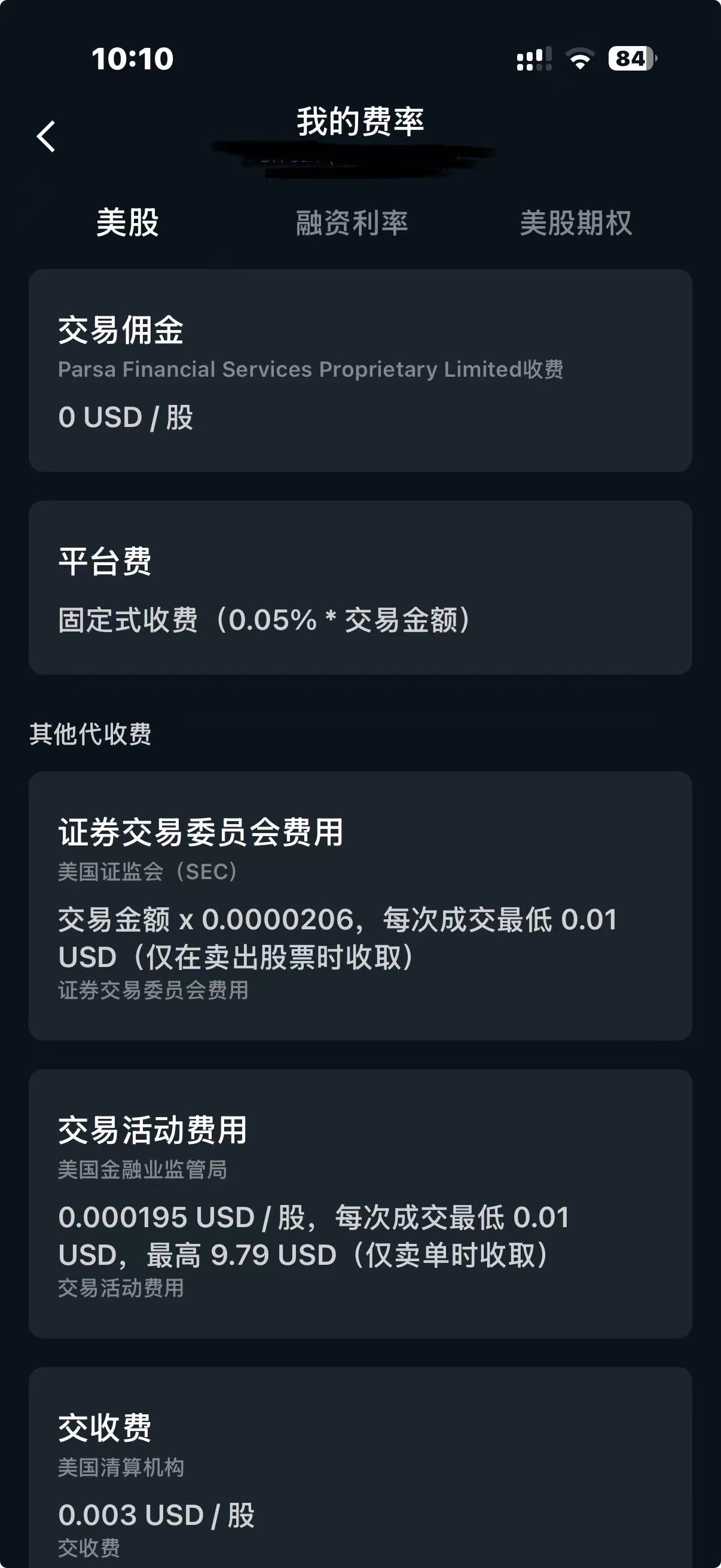
This table keeps only the fee figures that can be checked directly from the official pages. For Bitget's direct US stock line, the platform fee and the sell-side add-ons need to be read separately.
| Platform / Product | Headline Fee | Extra Fees / Notes | Reference |
|---|---|---|---|
| Traditional broker | Often 0 commission for online self-directed trades | Options, assisted trades, transfers, FX, and service fees may apply | Schwab pricing |
| Binance stocks | 0.05% | Use the official stock fee page as the source of truth | Binance stock fee page |
| Bitget rToken / Stocks 2.0 | Promo maker / taker 0.05% | May still involve spread, funding FX, withdrawals, and chain fees | Standard fee / Promo fee |
| Bitget direct US stocks / Stock+ | 0 USD/share commission + 0.05% platform fee | Sell-side SEC fee, transaction activity fee, and clearing fee also apply | See screenshot below; no separate fee link |
| Interactive Brokers | Fixed: US$0.005/share; Tiered: about US$0.0005 - 0.0035/share | Exchange and clearing-related fees may also apply | IBKR commissions |
Invitation Links
If you want to try the platforms mentioned above, these are the current invite links: